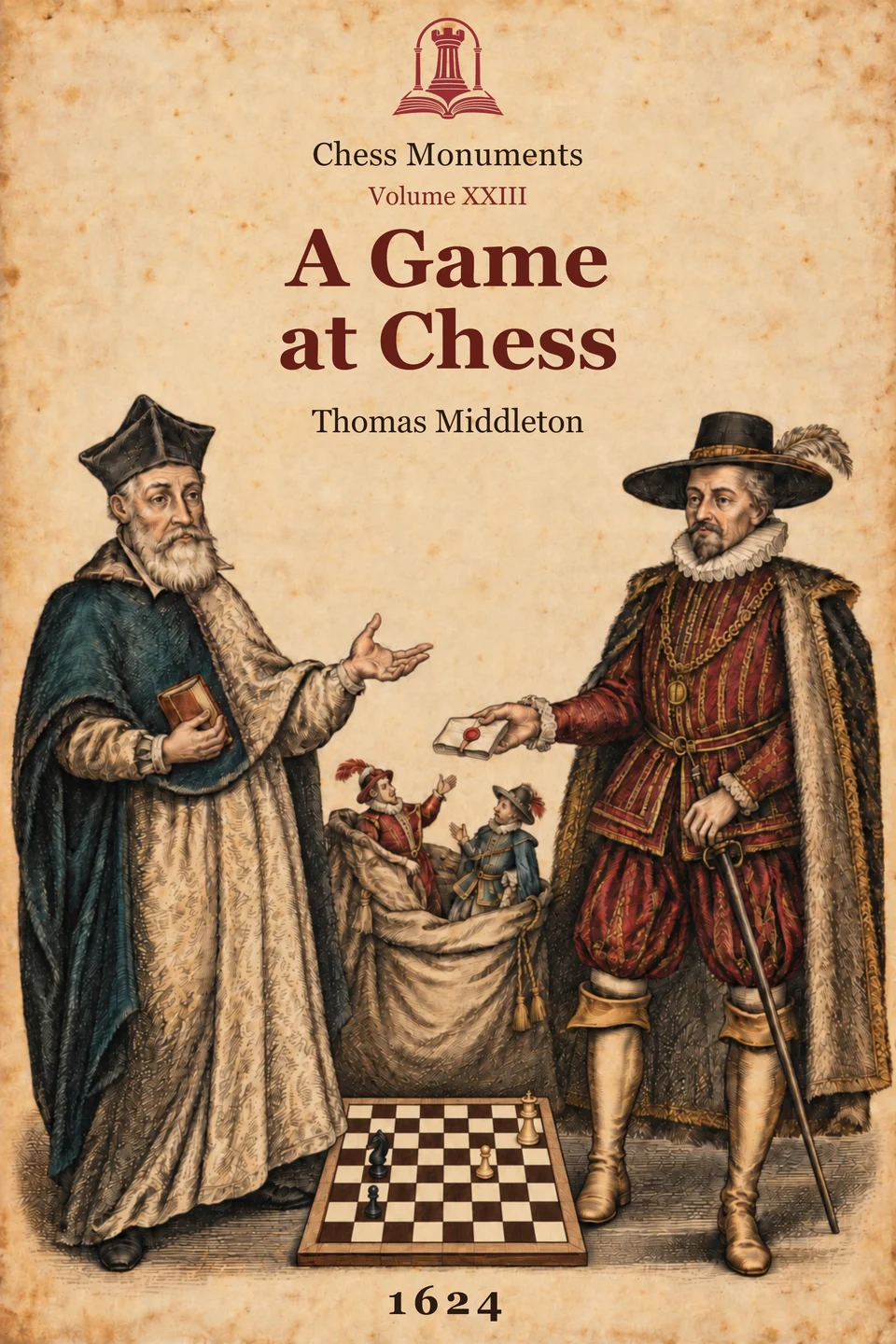
Thomas Middleton
Original title: A Game at Chess
In Thomas Middleton's play, the chessboard becomes the stage for political and religious conflict. White and black pieces act as characters: they persuade, tempt, conceal their intentions and seek to exploit their opponents' weaknesses. Behind their chess names unfolds a satire connected to the conflicts of seventeenth-century England and the language of public controversy.
A prologue, introduction, five acts and epilogue form a sustained drama of deception and exposure. The chess allegory defines the characters' roles and relationships, while intrigue develops through conversation, dissimulation and clashes of will. Understanding the work involves its political allusions, the theatrical force of its language and the sharpness with which the author portrays the opposing side.
This volume reveals chess as a language of public debate and theatrical art. The free-verse translation is accompanied by explanations of the historical controversy and ambiguous readings. The play retains the harshness of its time: it includes scenes of coercion, coarse language and religious accusations. These belong to the work's satirical world and call for attentive historical reading.
Read free without registering. Sign in to your ChessCombine account to download PDF and FB2 for free.