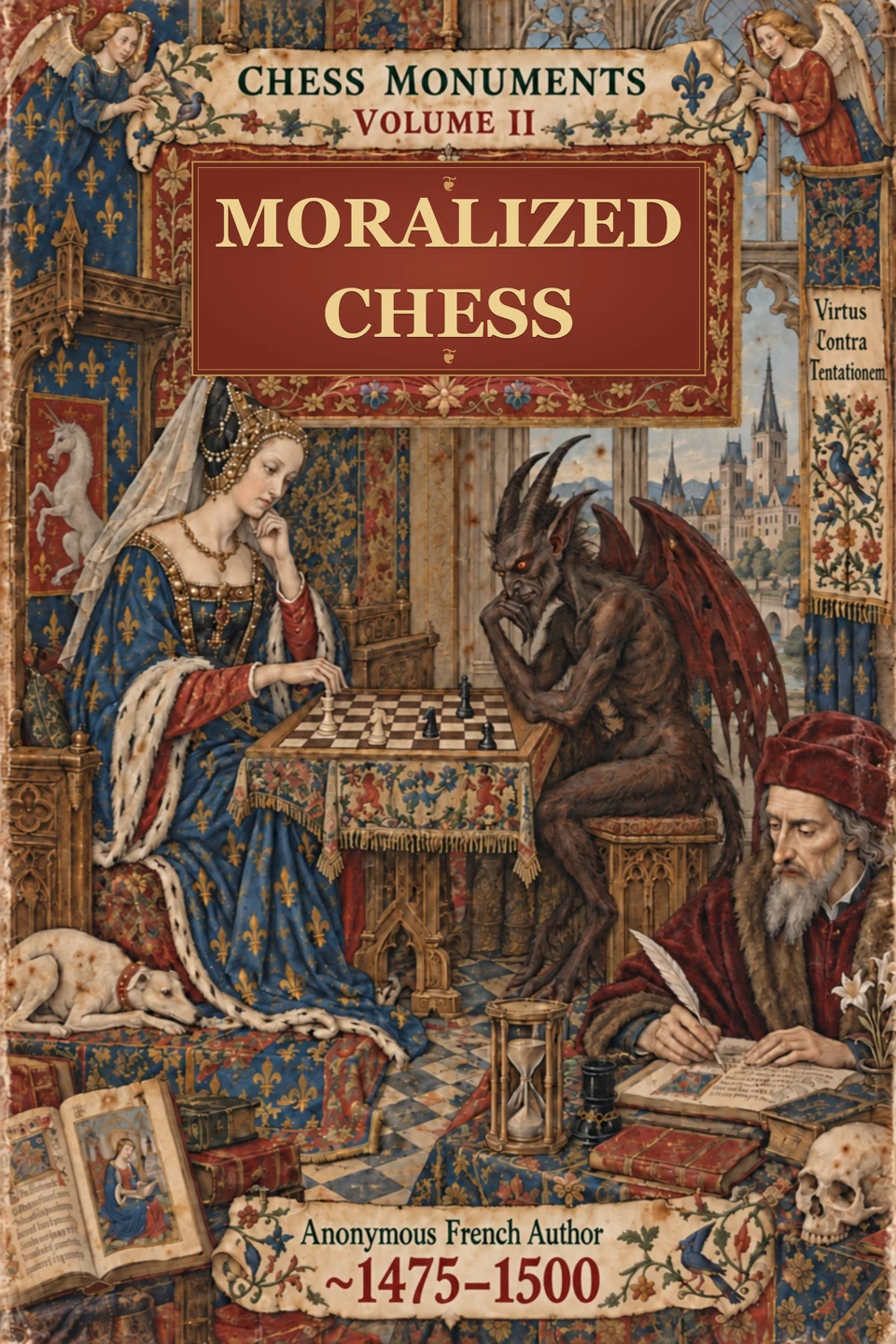
Original title: Le Jeu des Eschés de la Dame moralisé
This anonymous French allegory from the late fifteenth century portrays a chess game in which a human soul is at stake. A devout lady confronts the devil; the board becomes an image of the world, and the pieces take the names of virtues and vices. Behind an apparently simple contest unfolds an extended reflection on freedom of choice, temptation and spiritual resolve.
Fifteen chapters gradually reveal the meaning of the struggle. Self-love and love of God, ambition, benevolence, pleasure, temperance, dissimulation and humility act as opposing forces. Chess moves link individual moral reflections into a single narrative: attack, defence and the loss of a piece become events in a person's inner life.
The book shows how broad the cultural language of chess was at the turn from the Middle Ages to the Renaissance. It rewards reading as a monument to the religious thought and literary imagination of its time. This edition is based on a manuscript copy made in 1913; uncertainties in the source are identified in notes, while explanations and a reconstruction of the game help readers follow the allegory's chess structure.
Read free without registering. Sign in to your ChessCombine account to download PDF and FB2 for free.